Act; 3581 Larch Lane Jackson, MO 63755 Phone: 800-253-7360 Fax: 269-388-9681 Office Hours: 8:00 AM to 5:30 PM Mon – Fri (CST). Proco: Born 1978 Pro Co Sound factory in downtown Kalamazoo, Michigan. The Rat series of pedals. Dating Proco Rat pedals. There is no accurate way of dating a RAT pedal by its serial number alone, but a timeline at the web site can help determine the general age of your pedal – see Rat Distortion.
- Proco Rat Distortion Pedal
- Rat Distortion Pedal Serial Number
- Best Rat Distortion Pedal
- New Distortion Pedals
In this ProCo RAT2 review, we’re going to be discussing the pedals features, tone and performance to find out what makes this distortion pedal so highly regarded.


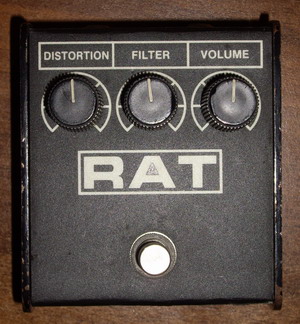
The RAT distortion by Pro Co has reached legendary status for their unique drive sounds and is a standard of measuring other distortion pedals. While a lot of the iterations of the RAT existed in many years, most versions have unique similarities: that 3-knob layout, familiar RAT housing enclosure, and a characteristic distortion which has fuzz-like features, fitting since Pro Co began repairing Fuzz Faces before the RAT was designed.
After the original pedals and their 80’s incarnations set the legacy for the foundation of the RAT, Pro Co launched the RAT2, providing classic RAT distortion tones having a convenient off/on LED, easy-access battery part, and carrying bypass switching as well as that signature Filter control.
When they were designing the first RAT box, Pro Co wanted to build something different. It did not just apply to the pedal’s sound, however to its overall appearance too. The result is an enclosure which is anything but standard if compare to modern Boss-like units.
This unusual format n a way made it appealing to people who were interested in something untraditional. The entire pedal consists of thick steel that you can regularly abuse without it failing on you in any way. This claim was proven many times by now. Although it’s quite hefty for an effects pedal, units of RAT are traditionally rather easy.
What you have is an entirely analog circuitry, which delivers quality in all areas, from performance to durability. Just as you would expect, these have true bypass as standard. Alos, the controls are restricted to three knobs. A Volume knob, a Filter knob, and Distortion knob to work with.
One of the absolute best things with Pro Co RAT2 Distortion is how sensitive its control knobs are. It really takes tiny adjustments to change the tone entirely. While it does need you to dial in the tone with care, you get much wider tones to play with.
Based on what kind of tone you’re looking for, Pro Co RAT2 Distortion can be your best friend. It is not about it being bad or good; it’s about how different it is compared to others. You can also get anything from a bit overdrive layered on a clean channel, to full distortion, which is infused with what seems to be an endless number of gain.
Pro Co RAT2 Distortion is one of those effects pedals that you love. There does not look like a middle ground. It’s definitely among the most iconic stomp boxes created in the past many years. The fact that Pro Co has not changed about these pedals is the proof you’ll need for its performance.
That’s a minimal amount of time taken to go over its range roughly. Any more information than that can even take weeks to find properly. Finally, it’s worth mentioning that the whole cost of this experience falls within the category you can afford. Pro Co has rightly kept the prices in that great spot where you’re should invest in one, while it’s a bargain at the same time too!
If you found this ProCo RAT2 review both enjoyable and informative. Comment below your own review or any questions you may have regarding this product.Buy On AmazonThe ProCo RAT2 distortion pedal has a rating of 4.5* out of 5* on Amazon –
For more reviews on the best overdrive pedals Click here
For reviews on all pedals Click here
Time to improve your guitar playing skills? Check out our GuitarTricks Review for 14-day free trial offer.
The Pro Co 'The RAT' is a distortionpedal produced by Pro Co Sound. The original RAT was developed in the basement of Pro Co's Kalamazoo, Michigan facility in 1978.[1] Numerous variations of the original RAT pedal are still being produced today.
The pedal has changed in appearance over the years, but its tone has remained largely the same. Pro Co has also introduced variations of the RAT, including the Turbo RAT and the You Dirty RAT, among others.
History[edit]
The origins of the Pro Co 'The RAT' can be traced back to the mid-1970s, when Pro Co engineers Scott Burnham and Steve Kiraly repaired and hot-rodded existing distortion pedals, such as the Dallas Arbiter Fuzz Face. Burnham decided he could build a superior product from the ground up, and designed 'The RAT' pedal.
In 1978, 'The RAT' was being built as a custom-order product.[2] Only twelve of these pedals (including one prototype), commonly referred to as the 'Bud Box' RAT, were produced. Each pedal was built in a standard project box, hand painted, and hand drilled. In 1979, Pro Co began mass-producing them.[2] This iteration was built in a custom designed, rectangular sheet-metal enclosure, with an L shaped removable top/back section giving access to the internals. The top panel was labeled with Pro Co Sound 'The RAT' and the three control knobs as Distortion, Tone and Volume.
In 1983, Pro Co switched to a smaller, U-shaped enclosure. Finally, in 1988, the RAT2 was introduced, which included an on/off LED. Various RAT2 circuit board layouts and wiring configurations have surfaced in the last few years, including the noted 'RAT3 version A and B' all under the RAT2 moniker. The RAT2 model is still available today, but in 2008 production moved to China and is now manufactured by Neutrik for Pro Co Sound.
Other models of RAT products include:[2]
- R2DU (1984-1988)
- Juggernaut (original) (1979-1981)
- RAT2 (1988–present)
- Turbo RAT (1989–present)
- Vintage RAT Reissue (1991-2005)
- BRAT / Roadkill (1997-2001)
- Deucetone RAT (2002–present)
- Juggernaut (reissue) (2003–present)
- 25th Silver Anniversary RAT (2003)
- You Dirty RAT (2004–present)
- SOLO (2006–present)
- '85 Whiteface RAT Reissue (2010)
Circuitry[edit]
The Pro Co 'The RAT' is a distortion pedal with a quite simple circuit, which can be broken down into four simpler blocks: distortion stage, tone control, output stage and power supply.[2]
The design is based around a single opamp, originally the Motorola LM308 (switched to Texas Instruments OP07DP around 2002-2003). The distortion is produced using a variable gain circuit with diodes shorting the output to ground at a certain voltage level to produce hard clipping of the input waveform. Originally, 1N914 diodes were used, which were later replaced with 1N4148 since RAT2. The 'Turbo RAT' pedal uses red LEDs for this purpose (red LEDs have about a twice as high forward voltage as the original silicon diodes), while the 'You Dirty RAT' pedal uses 1N34A germanium diodes (clipping at a lower forward voltage).[2][3] The distortion stage is followed by a passive 'reverse' tone filter and volume control.
The general design is very similar to the Boss DS-1 distortion pedal. A major difference is the opamp used (the LM308). Known for its poor slew rate, it largely accounts for the sonic difference between the two pedals.[citation needed]
Versions of the RAT[edit]
Current product line[edit]
- RAT2 (Silicon clipping diodes)
- Turbo RAT (Red LED clipping diodes)
- You Dirty RAT (Germanium clipping diodes)
- FAT RAT (Silicon / MOSFET / Germanium clipping diodes mode, 'Thick' switch (treble cut), 9/18V and a swappable opamp)
- Deucetone RAT (Dual RAT (2-in-1) pedal (separate In / Out jacks per side), Side A Silicon / LED / Germanium clipping diodes mode, Side B Silicon / LED / Diode lift clipping diode mode)
- Juggernaut (Reissue version)
Proco Rat Distortion Pedal
Non-RAT moniker pedals currently produced by ProCo[edit]
- Solo (Three asymmetric clipping diode pairs modes (Hot / Melt / Burn), Scoop control (Midrange), Tone (instead of typical 'reverse' Filter tone control), Texas Instruments OP07DP opamp. The prototype was called 'RATZO' and featured a center placed dual-gang pot for 'Tone' & 'Scoop' controls along with the 'Distortion' and 'Volume' controls in typical RAT fashion)
Discontinued products[edit]
- 'Bud Box' RAT (The original handbuilt RAT)
- 'Big Box' RAT (Distinct big rectangular box pedal)
- Juggernaut (also called 'Bass RAT') (Original version) (modified RAT circuit with 'Low Pass' filtering in place, Dual (2-in-1) RAT size enclosure, Right side: 'Mix' (between Drive / Clean ratio), Master Volume and on the Left side: Amount (Drive), Tone, Vol. The pedal also features an external effects loop)
- 'Small Box' RAT (Bent steel U-shape enclosure)
- R2DU (19 inch rackmountable double RAT pedal, usable in cascade mode or dual channel)
- BRAT / Roadkill ('budget' USA-made RAT2 derivative circuit including the Motorola LM308 opamp with the negative-feedback loop lifted. The front faceplate is two-sided with one 'BRAT' print side and on the other side a 'Roadkill' print. Note, this pedal is 9 V battery fed only)
- Vintage RAT Reissue (rectangular shaped 'Big Box' reissue model)
- '85 Whiteface RAT Reissue (Limited run '10)
Special Runs[edit]
- IKEBE 40th Anniversary: All-white RAT2 pedal with black lettering, white knobs and a bright blue LED (Japan only model).
- 25th year Silver Anniversary Rat: 'Big Box' pedal in a distinct silver coloured stainless steel enclosure with the tagline '25 years of Grunge' (Limited anniversary model, handed out to select artists and technicians by Pro Co sound).
Popular modifications to the RAT[edit]
The RAT is a popular pedal for modifying. Some of the possible modifications include:
- Resistor Mods: The Ruetz RAT mod which involves simply cutting the 47 Ωresistor to disengage half of the drive circuit. Gain is reduced somewhat and the bass is no longer attenuated. Additionally, the 560 Ω resistor controlling the lower half of the distortion filter can receive similar treatment. Either mod will translate to a thicker (fuzz like) bass response at the expense of losing distortion.[4]
- Toggle Switches: The Mightier Mouse mod involves a 3-way switch to select between RAT / RAT2 (clipping via silicon diodes), Turbo RAT (clipping via red LEDs), and FAT RAT (MOSFET clipping) modes. It also shows an alternative to the Ruetz RAT mod by using a potentiometer or trimpot to replace the resistor instead of cutting it out of the circuit.[5]
- Diode Lift: Removing one of the two (asymmetric clipping) or both (pure opamp clipping) clipping diodes results in a volume boost with a crunchier tone.
- Chip Substitutions: The original RAT pedals featured the rare Motorola LM308 opamp, which is now quite expensive to acquire. Recent RAT2 pedals nowawadays feature the widely available Texas Instruments OP07DP. Other opamps that people try, include: the CA3130EZ (MOSFET-based), the NE5535A / NE5534AP (high slew rate, low noise), the LM741 (low drive) and finally the TL071 / TL081 (both BI-FET based). Many RAT modders install an opamp socket to enable easy swapping of opamps, which is similar to what people do with the Ibanez Tube Screamer circuit.
- Capacitor Mods: 'softening' ceramic caps replaced with silver mica or metal film caps for better tonal fidelity. These include the 30 pF cap riding the opamp chip and the single 100 pF cap.
- Power Jack: 2.1 mm (Roland / BOSS-style) 9 V DC adapter socket mod. Because the tip on the BOSS-style adapter is negative, one needs to install a plastic 2.1 mm socket to avoid shorting out the barrel of the plug against the RAT's steel chassis (note, the official website says it uses a positive tip adapter).
Notable users[edit]
- Buckethead[citation needed]
- Ichirou Agata of Melt-Banana[6]
- John Ashton of Psychedelic Furs[citation needed]
- Trey Azagthoth of Morbid Angel[citation needed]
- Jeff Beck[7]
- Matt Bellamy[citation needed]
- James Dean Bradfield[citation needed]
- Nuno Bettencourt[1]
- Frank Black[1]
- Peter Buck[citation needed]
- Bernard Butler[citation needed]
- Jerry Cantrell[citation needed]
- Gustavo Cerati[citation needed]
- Nels Cline of Wilco[8]
- Justin Chancellor[citation needed]
- Lawrence Chandler[9]
- John Christ[citation needed]
- Kurt Cobain[10]
- Graham Coxon[1]
- Francis Dunnery[citation needed]
- Kevin Eubanks[11]
- Robert Fripp[citation needed]
- Bill Frisell[12]
- David Gilmour[13][14]
- Dave Grohl[15][16]
- James Hetfield[citation needed]
- Scott Kannberg[citation needed]
- Joey Lennon of The Punkles
- John Linger of Neils Children[citation needed]
- Stephen Malkmus[citation needed]
- Thurston Moore[17]
- Krist Novoselic[1]
- Ira Kaplan[citation needed]
- Sunn O)))[citation needed]
- Buzz Osborne[citation needed]
- Paranoid Time[citation needed]
- Joe Perry[18]
- Paul Reynolds of A Flock of Seagulls[citation needed]
- Ben Monder[19]
- Kurt Rosenwinkel[20]
- John Scofield[21]
- Sonny Sharrock[22]
- Justin Shekoski[citation needed]
- Kevin Shields[citation needed]
- Andy Summers[23]
- Alex Turner[24]
- Joe Walsh[citation needed]
- Jamie West-Oram of The Fixx[citation needed]
- Thom Yorke.[25]
- Xan McCurdy of Cake[26]
- Boris[27]
- Rivers Cuomo[1]
- Neil Halstead[1]
- Mark Gardener[1]
References[edit]
Rat Distortion Pedal Serial Number
- ^ abcdefghWilliams, Stuart (2 August 2010). 'Pro Co Reissue '85 Whiteface RAT'. MusicRadar. Future Publishing. Retrieved 29 January 2012.
- ^ abcde'Pro Co Rat Analysis'. ElectroSmash. Retrieved 6 January 2020.
- ^Tranter, G. (9 July 2015). 'Multi-RAT'. DIYStompBoxes. Retrieved 18 April 2016.
- ^'The Ruetz Rat'. DIY Tube Guitar Amp Page. Retrieved 6 January 2020.
- ^'Mightier Mouse'. Beavis Audio. Retrieved 6 January 2020.
- ^'Agata of Melt Banana'. GuitarGeek. Archived from the original on 22 July 2012. Retrieved 23 July 2012.
- ^Ross, Michael (1998). Getting Great Guitar Sounds: A Non-Technical Approach to Shaping Your Personal Sound. Hal Leonard Corporation. p. 69. ISBN978-0-7935-9140-4. Retrieved 29 January 2012.
- ^Nels Cline. 'Tech Talk'. nelscline.com. Archived from the original on 28 January 2012. Retrieved 29 January 2012.
- ^'Lawrence Chandler – Bowery Electric – 1994'. GuitarGeek. Archived from the original on 24 March 2014. Retrieved 6 January 2020.
- ^Berkenstadt, Jim; Cross, Charles R. (2003). Nevermind: Nirvana. Music Sales Group. p. 81. ISBN978-0-8256-7286-6. Retrieved 29 January 2012.
- ^Chapman, Charles H. (2001). Mel Bay Presents Interviews with the Jazz Greats-- and More. Mel Bay Publications. p. 24. ISBN978-0-7866-5946-3. Retrieved 29 January 2012.
pro co rat.
- ^Cleveland, Barry. 'Bill Frisell'. Guitar Player. Archived from the original on 12 May 2012. Retrieved 29 January 2012.
- ^Riis, Bjørn (18 April 2011). 'Tip of the week (11) – Overdrive and distortion'. Retrieved 4 February 2012.
- ^Cornish, Pete. 'David Gilmour's Pink Floyd 1994 Rig'. Retrieved 4 February 2012.
- ^Doyle, Tom (June 2011). 'FOO FIGHTERS: Recording Wasting Light'. Sound on Sound. Retrieved 29 January 2012.
- ^Dale Turner (1999). 'Rockin' Grohl Hoochie Foo'. Guitar One.
- ^Kitts, Jeff; Tolinski, Brad (2002). Guitar World Presents One Hundred Greatest Guitarists of All Time from the Pages of Guitar World Magazine. Hal Leonard Corporation. p. 95. ISBN978-0-634-04619-3. Retrieved 29 January 2012.
- ^Prown, Pete; Sharken, Lisa (2003). Gear Secrets of the Guitar Legends: How to Sound Like Your Favorite Players. Hal Leonard Corporation. p. 55. ISBN978-0-87930-751-6. Retrieved 29 January 2012.
- ^Ross, Michael (15 November 2017). 'Ben Monder on Texture, Ambience, and Guesting on Bowie's 'Blackstar''. Guitar Player. Future Publishing. Retrieved 6 January 2020.
- ^'Kurt Rosenwinkel'. Guitar Player. Archived from the original on 2 June 2012. Retrieved 29 January 2012.
- ^John Scofield. 'Equipment'. johnscofield.com. Retrieved 29 January 2012.
- ^Kitts, Jeff; Tolinski, Brad (2002). Guitar World Presents One Hundred Greatest Guitarists of All Time from the Pages of Guitar World Magazine. Hal Leonard Corporation. p. 99. ISBN978-0-634-04619-3. Retrieved 29 January 2012.
- ^Gill, Chris (1995). Guitar legends: the definitive guide to the world's greatest guitar players. Harper Perennial. p. 127. Retrieved 4 February 2012.
- ^Hunter, Dave (2011). The Rough Guide to Guitar. Penguin Books. p. 223. ISBN978-1-4053-8244-1. Retrieved 29 January 2012.
- ^Hunter, Dave (2011). The Rough Guide to Guitar. Penguin Books. p. 222. ISBN978-1-4053-8244-1. Retrieved 29 January 2012.
- ^'Fat Sound'. Retrieved 6 January 2020.
- ^'Boris official Instagram'. Retrieved 15 January 2017.
Best Rat Distortion Pedal
